Introduction
The envelope industry runs on three words — commercial, catalog, booklet — and most buyers use them loosely. That is a problem, because the words describe construction, not size, and construction decides whether your envelope can be printed the way you want, whether it will run through your inserter, and whether it needs a custom die.
The single thing that separates them is where the envelope opens, and the second is how the back is seamed. Get those two right and the rest of the specification follows.
This guide covers both, plus the part buyers almost never ask about until something goes wrong: how the seam interacts with printing and with automated inserting. For the individual numeric sizes — #10, #9, #6¾ and the rest — see our standard business envelope size guide; this article covers the classification and how to choose within it.
The Two Questions That Define an Envelope
Everything in this category comes down to two properties.
| Question | What It Decides |
|---|---|
| Where does it open — long edge or short edge? | How you load it, and whether an inserter will run it |
| How is the back seamed? | What you can print on the back, and how it is made |
Naming follows the first question, and the industry uses two pairs of terms interchangeably.
| Opening | Also called | Flap sits on |
|---|---|---|
| Open side | Booklet style | The long edge |
| Open end | Catalog style | The short edge |
That mapping is the root of most confusion, because "open side" and "booklet" are the same thing, and so are "open end" and "catalog". The words describe the same construction from two different angles.
| If the flap is on… | It is an… | Which is also called |
|---|---|---|
| Long edge | Open-side envelope | Booklet style |
| Short edge | Open-end envelope | Catalog style |
Commercial Envelopes
"Commercial" is the family that includes the everyday business envelope — the #10 being the best-known member. Commercial sizes are the small formats used for correspondence, statements, invoices and direct mail.
| Property | Commercial |
|---|---|
| Opening | Open side (flap on the long edge) |
| Typical use | Folded letters, statements, invoices |
| Construction | Either diagonal or side seam |
| Loading | Hand or machine, single sheets |
| Content thickness | Thin — a few folded sheets |
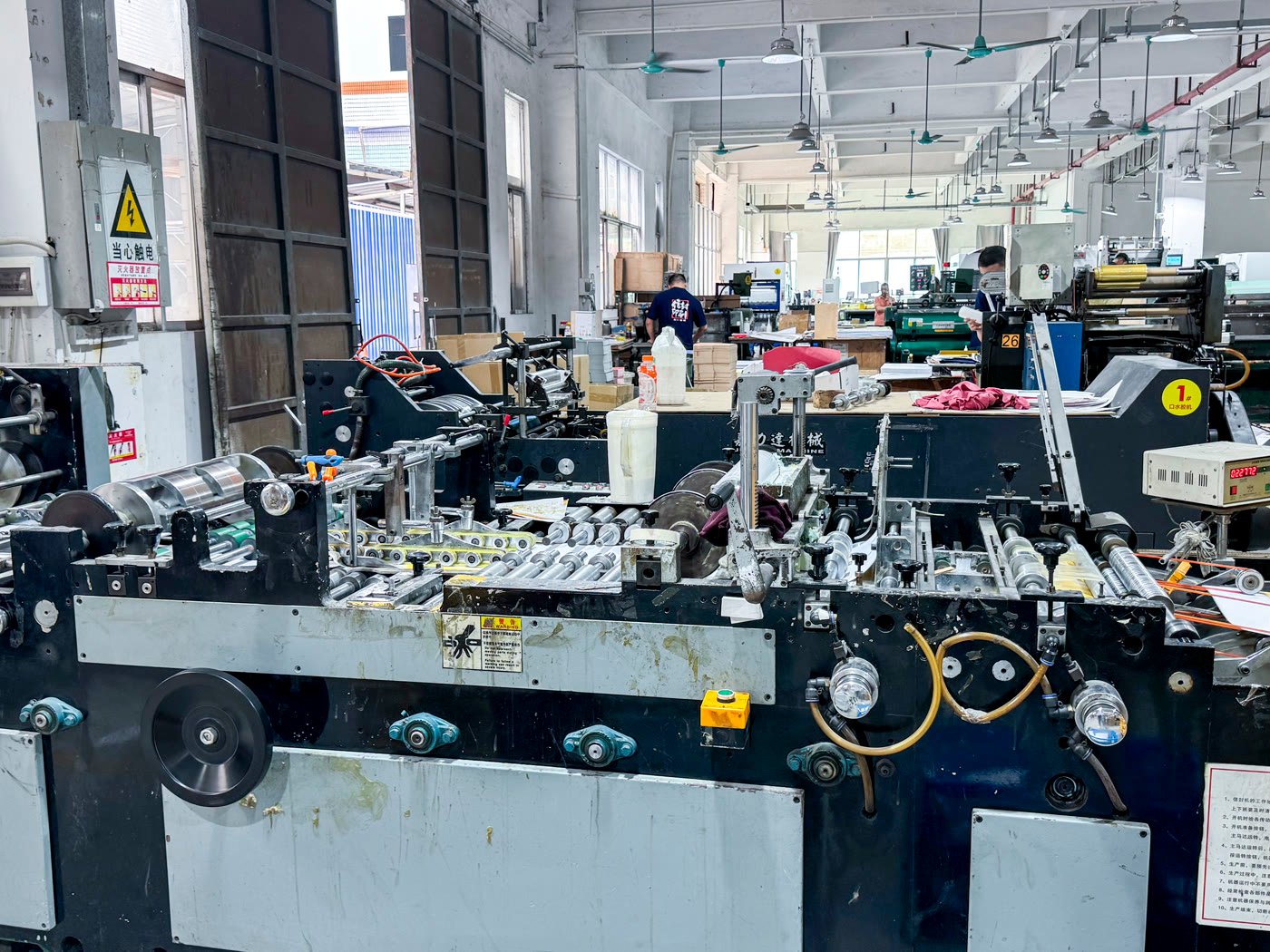
The important correction to a common assumption: commercial envelopes are not defined by one seam type. They are made with either a diagonal seam or a side seam, and the choice depends on quantity, inserting method, and back printing.
| Seam | How it is made | Back appearance |
|---|---|---|
| Diagonal seam | Pre die-cut, then folded and glued in a separate process | Visible diagonal seam lines behind the flap |
| Side seam | Either die-cut (small runs) or formed in-line on web equipment (large runs) | Smooth, fold-free back panel |
Catalog Envelopes
Catalog envelopes are the large formats used for material that must arrive unfolded. They open on the short edge, and their back is seamed down the centre.
| Property | Catalog |
|---|---|
| Opening | Open end (flap and opening across the short edge) |
| Seam | Centre seam, down the middle of the back |
| Typical use | Reports, certificates, unfolded documents, catalogues |
| Loading | Hand stuffing — contents load through the narrow end |
| Content thickness | Thicker stacks than a letter |
The centre seam is the identifying feature: turn the envelope over and the seam runs vertically down the middle of the back.
| What you will notice | Why it matters |
|---|---|
| Centre seam on the back | That seam interrupts full-coverage back artwork |
| Opening on the narrow edge | Contents slide in through the short side |
| Deeper body | Takes a thicker stack than a commercial envelope |
Booklet Envelopes
Booklet envelopes open along the long edge and are seamed at the two sides, which leaves the back panel clear.
| Property | Booklet |
|---|---|
| Opening | Open side (flap along the long edge) |
| Seam | Side seams — one at each side |
| Typical use | Booklets, catalogues with binding, stapled reports |
| Loading | Hand or machine, wider aperture |
| Back panel | Clean, with seams at the edges only |
That construction is why booklet envelopes suit bound or stapled contents: the wide opening lets a booklet slide in flat, and the side seams do not cross the back.
For the booklet format in detail — sizes, seam specifications and thick-mail guidance — see our booklet envelopes guide.
The Three Side by Side
| Commercial | Catalog | Booklet | |
|---|---|---|---|
| Opening | Long edge (open side) | Short edge (open end) | Long edge (open side) |
| Seam | Diagonal or side | Centre | Two sides |
| Back panel | Seam lines (diagonal) or clear (side) | Centre seam | Clear |
| Contents | Folded letters | Flat documents, thicker stacks | Booklets, bound items |
| Loading | Easy | Through the narrow end | Wide aperture |
| Typical format | #10 and similar | 9 × 12 and larger | 6 × 9 and larger |
The counter-intuitive row is the first: commercial and booklet share the open-side construction, and the difference between them is size and seam, not opening direction. Catalog is the odd one out — it is the only one of the three that opens on the short edge.
The Decision Table
Start from what you are putting inside.
| Contents | Envelope | Why |
|---|---|---|
| Folded letter, statement, invoice | Commercial | Open side, thin contents |
| Several folded sheets | Commercial, side seam | Smoother back for printing |
| Unfolded document, flat | Catalog | Opens wide enough to load flat |
| Stapled or bound report | Booklet or catalog | Depth and wide aperture |
| Booklet or catalogue | Booklet | Designed for bound items |
| Thick stack, hand loaded | Catalog | Centre seam takes depth |
| Full-coverage back print | Booklet or side-seam commercial | Clear back panel |
| Machine-inserted at speed | Commercial, diagonal seam | Best inserter compatibility |
| If you are unsure, ask | Because |
|---|---|
| Will this be hand or machine inserted? | It changes which seam performs better |
| Is there back printing? | It rules out seams that interrupt the panel |
| How thick is the stack? | It decides between commercial and catalog |
| Is the content rigid or flat? | It decides opening direction |
How the Seam Affects Printing
This is where construction becomes a print decision, and it is the section buyers most often skip.
The behaviour described below comes from envelope-manufacturing practice — Elite Envelope's note on diagonal and side seams sets it out clearly — rather than from a published standard, so treat it as a starting point to confirm on your own press.
| Seam | Back panel | Consequence for print |
|---|---|---|
| Side seam | Smooth, fold-free | Full-coverage back printing works |
| Diagonal seam | Seam lines behind the flap | Printing across the seams causes ink build-up and gaps |
| Centre seam (catalog) | Seam down the middle | Artwork must avoid the centre line |
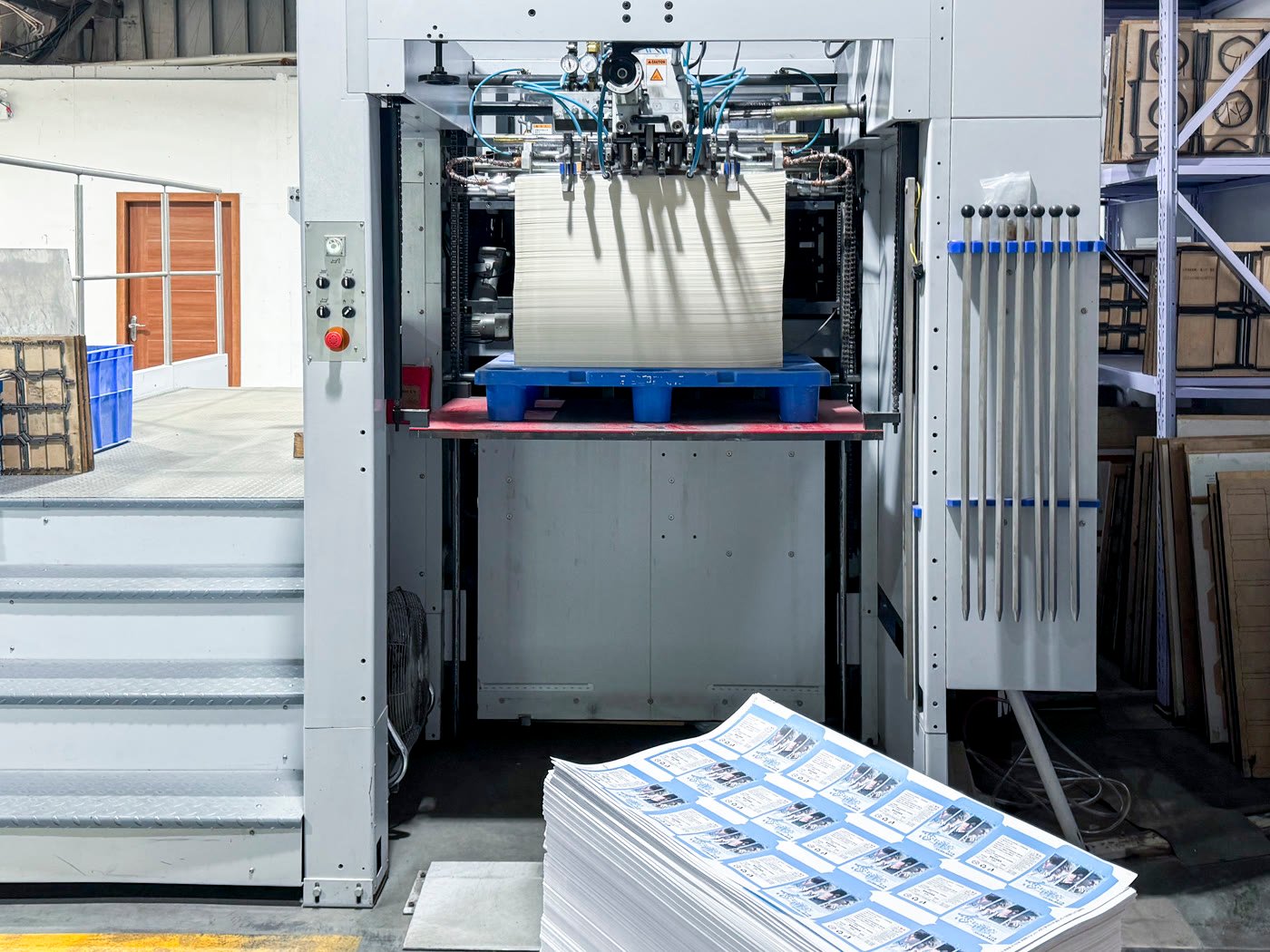
The practical rule: if your design needs significant printing coverage on the back, side seam is the specification that makes it possible. Envelopes can be printed over a diagonal seam, but the seam lines interrupt the image, and ink can pile up along them.
| Your back design | Seam to specify |
|---|---|
| Solid colour or photo across the back | Side seam |
| Logo only, clear of the flap | Either |
| Pattern that must be continuous | Side seam |
| Nothing on the back | Either — choose on cost |
For the flap and closure side of the specification, see our guides to envelope flap styles and closures compared.
How the Seam Affects Inserting
Automated inserting is the second place the seam matters, and the answer is not what most people assume. The observations here are the same manufacturer guidance rather than a specification — the inserter in front of you is the final authority.
| Seam | Inserter behaviour |
|---|---|
| Diagonal seam | Generally performs better on most inserters, especially small to mid-size machines |
| Side seam | Runs on larger, more sophisticated inserters without problems |
So diagonal is the safer default for machine inserting, but it is not an absolute rule: larger equipment handles side seam envelopes fine, and some operators still prefer diagonal regardless.
| Situation | Practical approach |
|---|---|
| Small or mid-size inserter | Diagonal seam |
| Large, modern inserter | Either — test to confirm |
| Changing construction on an existing job | Run a test before committing |
| Hand stuffing | Either; decide on printing |
The test point is worth taking seriously. Moving a job from one construction to another is a change to how the envelope feeds, and a short test run costs far less than a stopped inserting line.
How Quantity Changes the Construction
The same seam can be produced two ways, and quantity decides which.
| Production route | Typical volume | Character |
|---|---|---|
| Die-cut, then folded and glued | Smaller runs | Flexible; supports diagonal seam |
| In-line web equipment | Large runs | Faster, lower cost per thousand; side seam typical |
| If your quantity is… | What to expect |
|---|---|
| Small to mid | Die-cut route; either seam available |
| Large (six figures) | Web route; side seam is the natural output |
| Custom size at low volume | Die required regardless of seam |
This is why a specification that works perfectly at a few thousand pieces may need revisiting in the hundreds of thousands: the economics move to a different production method, and the seam often moves with it.
| Ask your converter | Why |
|---|---|
| Which seam will you run at this quantity? | Quantity can change the answer |
| Does the seam change at a volume break? | Print and inserting follow the seam |
| Is the die shared or new? | Tooling cost |
| Can you sample both seams? | The differences are physical |
Sizes, Briefly
Sizes sit inside these families, and each family has its own conventions. The chart below is a pointer, not a size reference — the numeric detail lives in our envelope sizes section.
| Family | Typical formats | Note |
|---|---|---|
| Commercial | #10, #9, #6¾ and related numbers | Small, letter-oriented |
| Catalog | 6 × 9, 9 × 12, 10 × 13 and larger | Flat document formats |
| Booklet | 6 × 9, 9 × 12 and larger | Bound-content formats |
| If you need… | Look at |
|---|---|
| The exact #10 dimensions | Standard business envelope size guide |
| What fits a 9 × 12 | The size index at /envelope-sizes/ |
| Booklet seam detail | Booklet envelopes guide |
Common Mistakes
| Mistake | Consequence | Fix |
|---|---|---|
| Calling a commercial envelope "side seam" by default | Wrong spec; the back print fails | Commercial is made with either seam — specify which |
| Assuming catalog opens on the long edge | Contents will not load as expected | Catalog opens on the short edge |
| Mixing up catalog and booklet | Wrong construction ordered | Catalog = centre seam, short edge; booklet = side seams, long edge |
| Full back print over a diagonal seam | Ink build-up and gaps | Specify side seam |
| Assuming side seam runs on any inserter | Line stoppage | Test on the actual machine |
| Keeping the same seam after a volume jump | Cost or compatibility changes | Re-confirm at the new quantity |
| Reading "booklet" as a size | Wrong expectation | It is a construction, not a dimension |
The first row is the one to internalise. "Commercial" describes a family of sizes, and that family is produced with both seam types. Treating it as a synonym for either one is the single most common specification error in this category.
Conclusion
Commercial envelopes are the small business formats, built with either a diagonal or a side seam, and they open on the long edge. Catalog envelopes open on the short edge and carry a centre seam down the back. Booklet envelopes open on the long edge and are seamed at the two sides, which is why their back panel stays clear.
Two consequences drive the specification. First, printing: a smooth back panel needs a side seam, because printing across diagonal seams causes ink build-up and gaps. Second, inserting: diagonal seams generally run better on small and mid-size inserters, while side seams suit larger equipment — so test before switching.
And remember that quantity can move the production route, which can move the seam with it. Confirm both when your volume changes materially. For the numeric sizes themselves, see our standard business envelope size guide; for the booklet construction in depth, our booklet envelopes article.
Specifying an envelope and unsure which seam your job needs? Request a quote with the contents, the printing plan and the inserting method.