Introduction
A manila envelope is not a white envelope in a different colour. The paper is uncoated, the base is buff, and the fibres are visible — and those three facts change what happens when ink meets it.
That matters commercially, because manila is one of the few envelope types that businesses still print in large quantities for reasons other than aesthetics: file and archive systems, legal and medical records, property and education paperwork, government and contractor documentation. A firm that prints its logo on ten thousand manila envelopes is making a specification decision, not a design flourish.
This guide covers that decision: why manila takes ink differently, which artwork survives it, how the clasp and structure interact with printing, and how to order a printed run without discovering the colour problem after delivery. For what manila envelopes are, their sizes, and how the clasps work, see our manila envelopes guide. That article covers the format; this one covers the printing and the order.
Why Manila Prints Differently
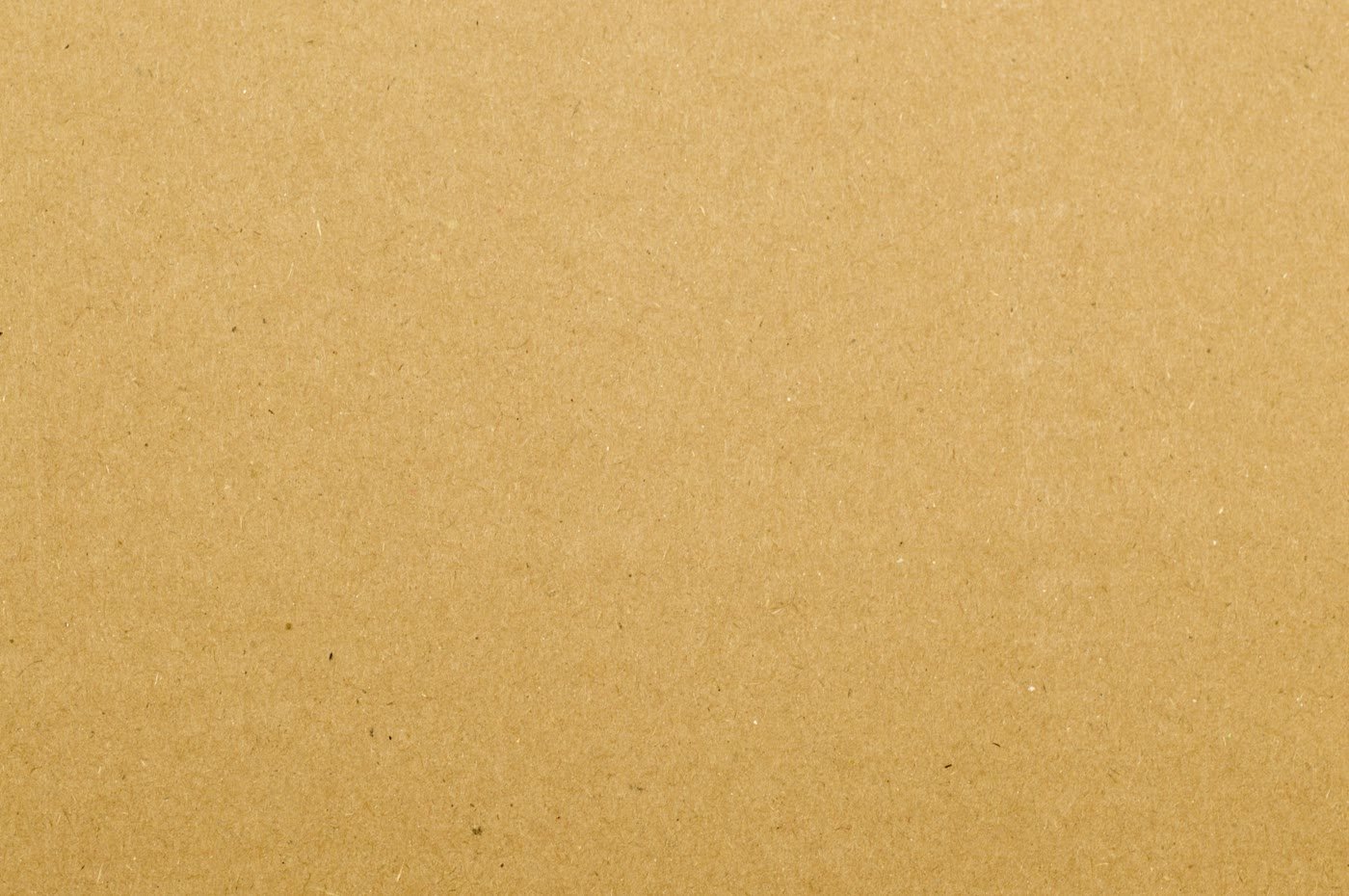
Manila paper is a relatively inexpensive, less-refined sheet made from semi-bleached wood fibres, and it is characteristically buff-coloured with visible fibres. Historically it was made from manila hemp (abacá); papermakers moved to wood pulp before the end of the twentieth century, and — as the standard reference entry on manila paper describes it — "the name and color remain."
Three properties follow, and each has a printing consequence.
| Property | Printing Consequence |
|---|---|
| Uncoated surface | Ink is absorbed into the sheet rather than sitting on top |
| Buff base colour | Every ink is printed onto a warm tint, not white |
| Visible fibre texture | Fine detail breaks up; large flat areas look uneven |
The first is the technical one. Coated papers carry a clay layer that holds ink at the surface; uncoated papers have no such layer, so the ink soaks in.
| Coated | Uncoated (manila) | |
|---|---|---|
| Surface | Clay layer | Bare fibre |
| Ink behaviour | Sits on top | Absorbed |
| Reflected light | Concentrated → bright, vivid | Scattered → soft, dull |
| Drying | Can be slower | Faster absorption |
| Detail | Fine detail holds | Detail fills in |
That "soft and dull" outcome is the normal result of four-colour process printing on uncoated stock, not a fault. It is something to design around rather than fight.
The Printing Consequence: Dot Gain
The measurable effect is dot gain: ink absorbed by uncoated paper causes each printed dot to expand, so tones darken and detail closes up.
| Factor | Effect on Manila |
|---|---|
| Dot gain on uncoated stock | Plan for roughly 15% |
| Practical result | Mid-tones print darker than the proof suggests |
| Fine detail | Small type and thin lines fill in |
| Flat solids | Uneven coverage; the fibre texture shows through |
| Colour accuracy | The buff base shifts every colour warm |
The figure comes from printing-industry guidance for uncoated stock — PsPrint's comparison of coated and uncoated papers puts it at 15 percent and describes the light scattering behind the softer look — and it is a planning rule of thumb, not a standard: the real gain depends on the sheet, the ink and the press. Carry it into artwork preparation: a tint you specified at 40% will read closer to 55% on the sheet. If your design depends on a specific tone — a brand colour, a gradient, a photographic element — that shift has to be compensated before plates are made, not adjusted after the proof.
| If your artwork has… | Expect |
|---|---|
| A large flat brand colour | The buff base shows through; the colour reads warmer and darker |
| Fine gradients | Banding and closing up |
| Small reverse-out type | Fills in; avoid below a practical minimum |
| Photographic imagery | Soft, low-contrast reproduction |
| Single-colour logo | Reliable — this is the safe case |
What Prints Well on Manila
The artwork that works on manila is artwork that does not need a white base.
| Approach | Why It Works |
|---|---|
| Single-colour logo | One ink, no base-colour fight |
| Line art and stamps | Bold lines survive dot gain |
| Dark ink on buff | Strong contrast against the warm base |
| Foil stamping | Sits on the surface; strong contrast on mid-tone stock |
| Emboss / deboss | Uncoated sheet takes relief cleanly |
| Solid dark blocks | Reads as intentional rather than uneven |
| Large, simple type | Survives absorption |
Two of these deserve emphasis for manila specifically.
Foil works unusually well because it is opaque and metallic: on a mid-tone buff sheet it reads immediately, where on a white sheet it can look thin. It is also the one decoration that does not depend on the paper accepting ink.
Emboss suits manila because the sheet is uncoated and has body: relief holds its shape without the coating cracking that a coated sheet can suffer.
| Decoration | On manila | Note |
|---|---|---|
| Foil stamp | Excellent | Opaque, high contrast |
| Emboss / deboss | Good | Uncoated fibre holds relief |
| Spot UV | Poor | Needs a coated or filmed surface |
| Lamination | Changes the product | Loses the manila character |
| Single-colour print | Excellent | The workhorse option |
| Four-colour process | Limited | Soft, dark, uneven |
What Does Not Print Well — and What to Do Instead
The failures are predictable, and each has a workaround.
| Problem | Why | Alternative |
|---|---|---|
| Pale or pastel solids | Cannot cover the buff base | Darker colour, or a white underprint |
| Bright white elements | White ink on buff reads grey-ish | Opaque white underprint, or foil |
| Fine multi-colour gradients | Dot gain closes them up | Flatten to fewer tones |
| Small colour logos | Detail fills in | Enlarge, or go single-colour |
| Photo reproduction | Soft and low contrast | Use a white or coated insert instead |
The most important workaround is the white underprint: a layer of opaque white printed first, then the colour on top. It restores the missing white base and lets colour read closer to expectation.
| With a white underprint | Trade-off |
|---|---|
| Colour reads as designed | An extra print pass, so higher cost |
| Works for small logos and coloured panels | Registration between white and colour matters |
| Keeps the manila look around the print | Not suitable for full coverage |
The honest summary: if the design needs a white base across most of the envelope, manila is the wrong substrate and a white or coated stock is the right answer. Manila is at its best when the design works with the buff.
Colour Strategy: Mono, Spot, or Process
Three workable strategies, in order of how reliably they land.
| Strategy | Fit on manila | Cost behaviour |
|---|---|---|
| Single colour (mono) | Best | Lowest — one plate |
| Two spot colours | Good | Moderate — two plates, no process build |
| Four-colour process | Limited | Highest — and least predictable |
| Process + white underprint | Workable | Highest of all — extra pass |
| Foil only, no ink | Excellent | Tooling plus a press pass |
| If your artwork is… | Choose |
|---|---|
| A one-colour logo and address | Mono |
| A logo with a secondary accent | Two spot colours |
| A branded colour panel | Spot colour, possibly with white underprint |
| A photograph | Not manila — use a white stock |
| A premium mark | Foil, with or without print |
For the wider cost logic behind these choices — plate counts, press passes, and how finishes stack — see our envelope printing cost guide. For the logo-specific questions of file format and print-ready artwork, our custom envelopes with logo article covers the handover.
Structure and Closure Options
Manila envelopes are defined partly by their closures, and the closure interacts with what you can print.
| Closure | Character | Print consideration |
|---|---|---|
| Metal clasp | Two prongs through a reinforced eyelet | Avoid printing across the eyelet reinforcement |
| Button and string | Reusable, traditional | String area is not printable |
| Gummed flap | Single use, clean seal | Printable flap |
| Peel and seal | Faster, modern | Printable flap |
| Open-end (no clasp) | Simple document wallet | Most printable area |
| If you need… | Choose |
|---|---|
| Repeated opening (files, records) | Clasp or string |
| One-way mailing | Gummed or peel and seal |
| Maximum print area | Open-end |
| Archive labelling | Clasp, with print kept clear of the eyelet |
The clasp matters for printing because the reinforced eyelet is a physical feature: artwork laid over it will not print cleanly, and the reinforcement itself may not accept ink evenly.
Windows, Linings and Indexing
Three structural options that come up in document-heavy purchasing.
| Option | Behaviour on Manila | Note |
|---|---|---|
| Window | Feasible, but needs a lining | The window reveals the buff interior, which affects legibility |
| Interior lining | Common for window versions | Improves contrast behind the address |
| Index tab | Added as a separate element | Tab stock may differ from the body |
| Numbering / barcode | Prints reliably in mono | Good fit for archive systems |
A window on manila is a different proposition from a window on white: the address reads against the paper inside, so a lining or a printed white patch is usually needed to keep it legible. That is a specification decision to settle before the die is made, not after.
| If the envelope is for… | Consider |
|---|---|
| Bulk filing | Index tab, mono numbering |
| Mailed statements | Window with a light lining |
| Archive storage | Clasp, barcode, no window |
| Legal or medical records | Clasp, restrained print |
Custom Sizes and Dies
Manila is sold in standard document sizes, and custom sizes follow the same tooling logic as any envelope.
| Decision | Effect |
|---|---|
| Standard size | Existing die, no tooling charge |
| Custom size | New die, one-time charge |
| Custom window | Additional tooling |
| Non-standard closure | May need a dedicated die |
| For a first order | Ask |
|---|---|
| Is there a stock die for this size? | Avoids tooling |
| Does the die include the clasp position? | Clasp and die are one decision |
| Can the window be added later? | Usually not without a new die |
| What is the smallest viable quantity? | Ask for the figure |
Large formats — the 9 × 12 and 10 × 13 class used for unfolded documents — sit in the broader large-envelope family; our large envelopes guide covers the size logic and what fits.
Bulk Ordering: Sampling, Tiers and Timing
A printed manila run is where the colour risk becomes expensive, because the failure mode is a whole print run, not one envelope.
| Stage | What to do |
|---|---|
| 1. Confirm the stock | Get the actual manila grade, not "manila" as a word |
| 2. White sample first | Confirm fold, clasp, size and window before any print |
| 3. Printed sample | Essential — buff base changes every colour |
| 4. Approve under real light | Office light and daylight differ |
| 5. Then the run | With the approved sample retained |
The sampling point is the one to insist on. On white stock a printed proof is usually enough; on a buff uncoated sheet, the interaction between ink and base is exactly what a screen cannot show.
| Risk | Mitigation |
|---|---|
| Colour reads darker than expected | Approve a physical printed sample |
| Large solid looks patchy | Reduce coverage, or add a white underprint |
| Logo detail fills in | Enlarge, or simplify to mono |
| Second batch differs | Retain an approved sample as the reference |
| Clasp area printed over | Confirm the dieline before artwork |
| Tier question | Why |
|---|---|
| Where does the next price break start? | A small increase may unlock a better rate |
| Is tooling one-time? | Reorders should not pay it again |
| Is the clasp cost separate? | Hardware can be a separate line |
| What is the packing? | Cartons and bundles affect freight |
For the volume-tier mechanics themselves, our bulk printing guide covers how setup amortises across a run; the manila-specific addition is that you should budget for a physical printed sample as a line item, not treat it as optional.
Who Buys Custom Printed Manila Envelopes
The buying pattern is driven by records and retention rather than marketing.
| Buyer | Typical purchase |
|---|---|
| Law firms and legal support | Clasp, printed firm name, archive marking |
| Medical and laboratory | Clasp, printed department, restrained print |
| Property and real estate | Printed logo, standard document sizes |
| Education and admissions | Printed institution mark, varied sizes |
| Government and contractors | Printed reference codes, clasp closure |
| Archives and records management | Mono numbering, barcode, index tabs |
| Print and mail bureaus | Bulk printed, standard sizes |
The common thread is that the print is functional: it identifies, files, or complies. That suits mono and spot printing, which is also where manila performs best — the product and the production method agree.
| If the purchase is driven by… | Print approach |
|---|---|
| Filing and identification | Mono, bold, large |
| Brand presence | Spot colour or foil |
| Archive compliance | Mono codes, no decorative coverage |
| Presentation to a client | Foil stamp on the flap |
Common Mistakes
| Mistake | Consequence | Fix |
|---|---|---|
| Approving from a screen proof | Colour reads dark on the buff base | Require a printed sample |
| Designing pale solids | Cannot cover the buff | Darken, or add a white underprint |
| Expecting four-colour photographs | Soft, dull, uneven | Use a white stock for image work |
| Printing over the eyelet | Artwork lost at the clasp | Keep clear of the reinforcement |
| Ignoring 15% dot gain | Tones darker than specified | Compensate in artwork |
| Assuming "manila" means one paper | Grade and shade vary | Confirm the actual stock |
| No retained sample | Second batch drifts | Keep the approved sample |
| Specifying a window late | New die required | Settle the dieline first |
Conclusion
Custom printed manila envelopes reward a different design approach from white envelopes. The paper is an uncoated, buff, semi-bleached sheet with visible fibre; ink is absorbed rather than sitting on top; and the practical consequence is roughly 15% dot gain, softer tones, and flat solids that show the texture through.
Design to that: single-colour logos, bold line art, dark ink on buff, foil stamps and emboss all work well. Pale solids, fine gradients and photographic imagery do not, and the fix is either a white underprint, a different colour strategy, or a different substrate.
Then settle the structure before the artwork — clasp, eyelet position, window and lining — approve a physical printed sample under real light, and treat sampling as a cost line rather than an afterthought. For the format itself, see our manila envelopes guide.
Ready to print a manila run? Request a quote with the size, the stock, and the artwork you have in mind — and ask for a printed sample before the run.